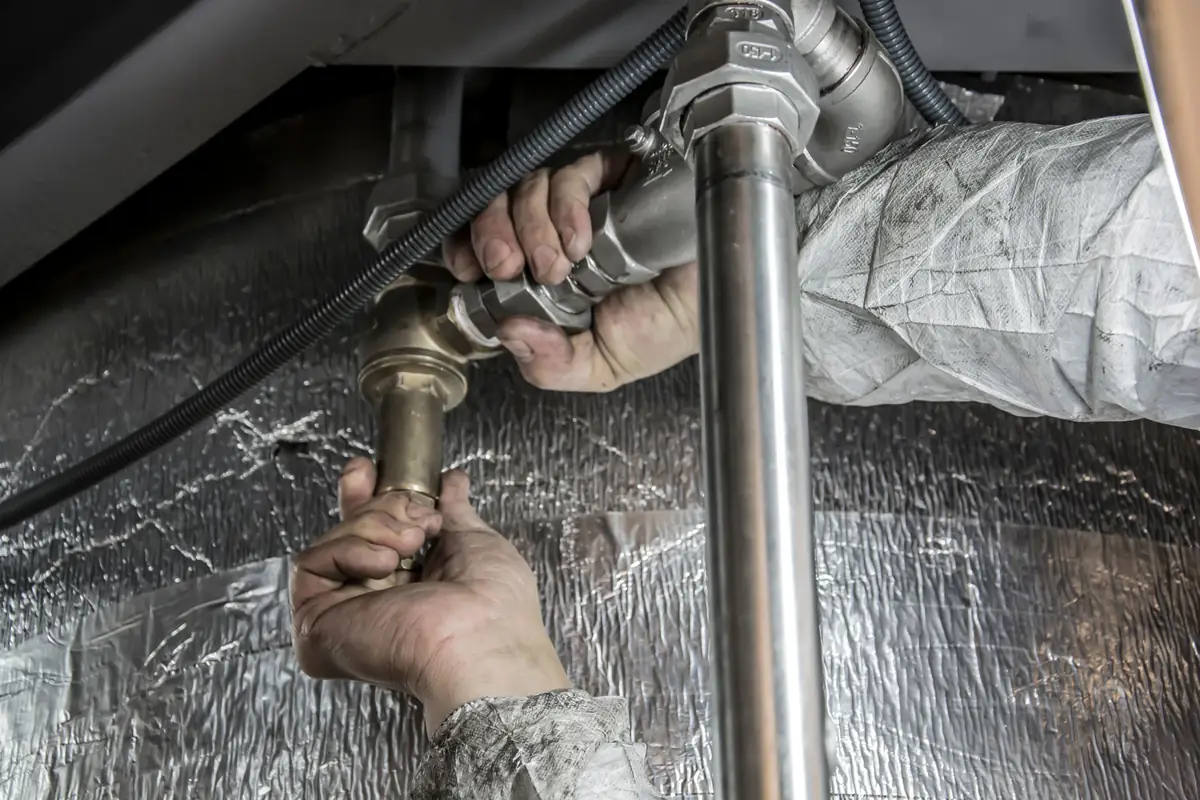
Burst pipes are the second most common maintenance issue reported in Dubai homes, after AC problems. Most leaks don’t start as a burst pipe, though. They start small and quiet, often behind a wall or under a floor, and the only clues are things that are easy to dismiss at first. Catching those early signs saves money and avoids the kind of damage that turns a plumbing job into a repainting and flooring job as well.
Signs to watch for
| Sign | What it can mean |
|---|---|
| Damp patch or discolouration on a wall or ceiling | Leak inside a wall, or from the unit above |
| Musty or mouldy smell, especially in a cupboard or bathroom | Ongoing dampness, often from a slow, hidden leak |
| Paint or wallpaper bubbling, peeling or staining | Moisture building up behind the surface |
| Water bill higher than usual with no change in habits | A leak running continuously, even if you can’t see it |
| Warm patch on a tiled floor | A hot water pipe leaking under the slab |
| Dripping or pooling water under a sink or around a toilet base | A failed seal, joint or supply pipe nearby |
| Sound of running water with all taps off | A leak somewhere in the supply line |
| Mould growing on a wall, especially near floor level | Persistent moisture, usually from a leak rather than condensation alone |
Which signs need urgent attention
Act quickly, the same day if possible, if you notice a warm patch on the floor, water actively pooling or dripping, or the sound of running water you can’t account for. These point to a leak that’s active right now, which means the damage, and the water bill, is accumulating while you wait. A patch of mould or a water bill that’s crept up gradually is still worth sorting soon, but it’s less of an emergency than active, visible water.
Why hidden leaks are common in Dubai buildings
Many Dubai apartments have pipework running within walls, under tiled floors, or through shared risers that also serve neighbouring units. That means a leak doesn’t always show up where it started. Water can travel along a pipe run or follow a crack before appearing somewhere else entirely, which is why a damp patch on your ceiling can sometimes be a leak from the unit above rather than your own plumbing. It’s also why AC drain lines are worth ruling out: a blocked AC drain can mimic a plumbing leak, with water appearing below or near an indoor unit rather than a sink or bathroom. If your “leak” is specifically near an AC unit, our guide on AC problems and their causes covers that angle too.
What a plumber actually checks
Finding the source of a hidden leak usually means working through a process rather than guessing:
- Checking the water meter with everything off, to confirm whether water is running somewhere in the system at all
- Inspecting visible pipework, joints and seals under sinks, around toilets and behind accessible panels
- Tracing damp patches back toward the most likely source, accounting for how water travels along pipes and through structure
- Using moisture readings or, for harder cases, leak-detection equipment to narrow down a location without opening up every wall
- Confirming the fix has worked by checking the meter again once the repair is done
What you can check yourself first
Before calling anyone, a couple of quick checks can save time. Look under every sink and around every toilet base for dampness, even faint. Check your water meter reading, then check it again after an hour with every tap and appliance off; if it’s moved, water is running somewhere. And if you’ve noticed a bill increase, compare it to the same month last year rather than just last month, since usage naturally shifts with the seasons.
If you rent the apartment
A burst pipe or major leak generally falls under the landlord’s responsibility to repair, since it affects the property’s basic use. Smaller, routine plumbing issues are often handled differently depending on your tenancy contract. Our guide on who pays for maintenance, landlord or tenant covers how that split usually works and what to check in your contract. Either way, tell us who to invoice when you book and we’ll handle it directly with them.
Preventing leaks rather than chasing them
A lot of leaks trace back to seals, washers and flexible hoses that simply age out over time, particularly under sinks and around washing machine connections. These are cheap to replace before they fail, but expensive to ignore once they do. If your apartment is older, or you’ve never had the plumbing checked since moving in, a one-off inspection of the visible pipework and connections is a sensible precaution, especially before a long trip away when nobody would notice a leak starting.
Book a leak inspection
If you’re seeing any of the signs above, it’s worth getting it checked before it spreads to flooring, paint or a neighbouring unit. Book a plumbing visit or send us photos on WhatsApp, and we’ll confirm the price before any work starts. If leaks keep recurring, ask about an AMC that covers plumbing call-outs as part of the plan.